
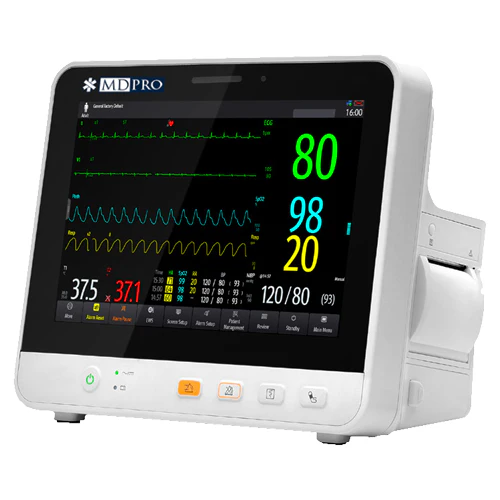
Bedside monitors are vital in modern healthcare, providing continuous, real-time data about a patient’s physiological status. They track key parameters like heart rate, oxygen saturation, respiratory rate, and blood pressure, giving clinicians the information they need to make swift, informed decisions.
With so many bedside monitor models available today, choosing the right one can be a challenge. Hospitals and clinics need to balance functionality, usability, and cost while ensuring compatibility with their existing systems. This blog highlights the key features to look for when evaluating bedside monitors for your facility.
Parameter Monitoring Capabilities
One of the first considerations is the range of patient parameters the monitor can measure. At a minimum, most bedside monitors should include ECG, SpO2, non-invasive blood pressure (NIBP), temperature, and respiratory rate.
For higher-acuity settings like intensive care units or operating rooms, you may need advanced parameters such as invasive blood pressure (IBP), end-tidal CO2 (EtCO2), and cardiac output monitoring.
Choose a monitor that fits the patient population you serve. Pediatric and neonatal units, for example, often require models that can accurately measure lower physiological ranges and support specialized sensors for small patients.
Ease of Use and Workflow Integration
A monitor’s interface directly affects clinical workflow efficiency. Look for bedside monitors with intuitive, touchscreen-based interfaces and customizable layouts that allow clinicians to view critical parameters at a glance.
Alarms should be clearly visible and easily adjustable to reduce alarm fatigue while ensuring patient safety. Additionally, the monitor’s size and mobility can influence how seamlessly it fits into different care environments, especially in smaller patient rooms or busy emergency departments.
Fast setup and simple operation are especially valuable in high-volume facilities where clinicians need to focus on patient care rather than learning complex systems.
Connectivity and Data Integration

In today’s connected healthcare environments, the ability of bedside monitors to integrate with hospital information systems is essential. Monitors should offer connectivity through standard protocols like HL7 or Wi-Fi to support electronic health record (EHR) integration.
This connectivity allows data to be automatically stored in patient charts, reducing manual entry errors and improving documentation efficiency.
Remote monitoring capabilities can also be helpful, allowing clinicians to view patient data from centralized workstations or mobile devices. This is especially useful in critical care areas where continuous observation is required.
Bedside Monitors at MedLabAmerica.com
Selecting the right bedside monitors can seem overwhelming, but it becomes much easier when you work with trusted suppliers. At MedLabAmerica.com, we understand how critical accurate and reliable monitoring is for patient care. We offer a range of bedside monitors designed to meet the needs of hospitals, clinics, and specialty care units, combining advanced features with dependable performance.
Our team is here to help you compare models and choose the monitors that align with your facility’s goals and workflow. Our collection also comprises medical tools, lab equipment, physical therapy and rehab equipment, veterinary equipment, cryosurgical equipment, and more.