
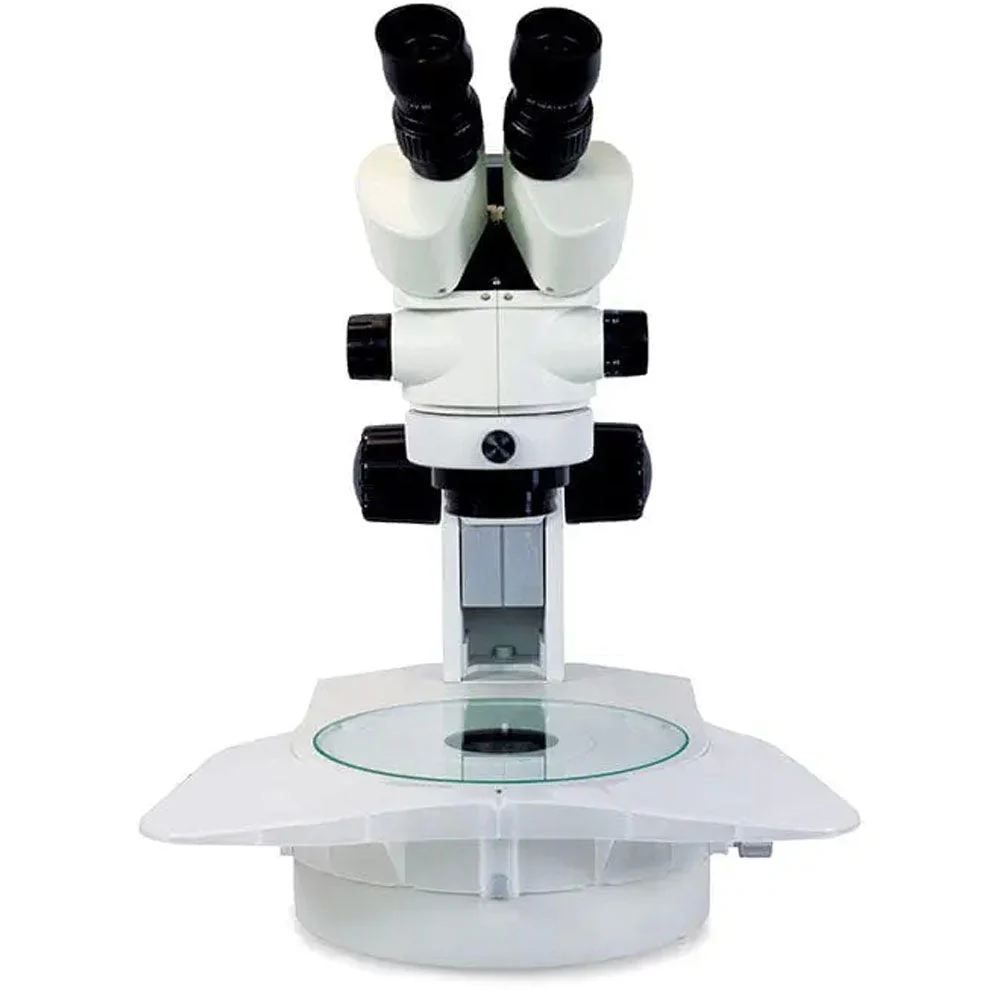
When tasks require detailed observation of samples, components, or materials in three dimensions, few tools match the value of a stereo microscope. Also known as a dissecting microscope, this type of instrument provides a true 3D view, allowing users to examine surface details, manipulate specimens, and perform precision work with ease. From biology labs to electronics repair benches, stereo microscopes are relied on for their clarity, simplicity, and versatility.
If you're in the market for one, this guide will walk you through the key factors to consider when choosing a stereo microscope for lab or inspection use.
What Makes a Stereo Microscope Unique?
Unlike compound microscopes that use transmitted light and high magnification for viewing slides, stereo microscopes use lower magnification and reflected light to observe the surface of solid objects. They feature two separate optical paths, one for each eye, creating a three-dimensional image with depth perception.
This makes stereo microscopes ideal for:
· Dissection and sample prep
· Circuit board inspection and soldering
· Quality control in manufacturing
· Forensics
· Gemology
· Repair and assembly of small parts
1. Magnification Range and Zoom Capability
Stereo microscopes typically offer total magnification from 10x to 50x, with some models going higher. You’ll often find:
· Fixed magnification microscopes with two or more preset settings (e.g., 10x and 30x)
· Zoom magnification models that allow you to smoothly adjust the level of magnification across a range (e.g., 7x to 45x)
For most lab and inspection work, a zoom model provides more flexibility, especially when working with a variety of sample sizes and detail levels. Make sure to check whether the microscope accepts auxiliary lenses for even greater magnification or field-of-view customization.
2. Working Distance
Working distance refers to the space between the objective lens and the object being viewed. The right working distance depends on how much room you need to manipulate specimens or tools under the lens.
For tasks like soldering, dissection, or inspection, a longer working distance (100 mm or more) is often preferable. Microscopes with higher magnification may have a shorter working distance, so finding the right balance between clarity and space is key.
3. Lighting Options
Lighting can make or break your viewing experience. Most stereo microscopes use reflected (incident) light, but some also offer transmitted light for translucent samples.
Common lighting configurations include:
· Built-in LED ring lights for even, shadow-free illumination
· Gooseneck lights for adjustable, directional lighting
· Dual light sources for both top and bottom illumination
If you're working with reflective surfaces like metal or glass, adjustable lighting helps reduce glare and improve clarity. For biological specimens or semi-transparent materials, a transmitted light option can be helpful.
4. Eyepieces and Ergonomics
Comfort matters, especially for extended use. Look for:
· Widefield eyepieces (typically 10x or 20x)
· Adjustable interpupillary distance for proper alignment between the two eyepieces
· Diopter adjustment to accommodate differences between your eyes
· Tiltable viewing heads or boom stands to allow for more ergonomic positioning
Some models are also compatible with trinocular ports and camera adapters if you plan to capture images or stream live footage for documentation or training.
5. Build Quality and Application Fit
Microscope applications vary by industry, and so does construction. For lab or classroom use, a durable base and enclosed optics may be sufficient. In industrial or field settings, you may want:
· Dustproof or sealed components
· Rugged metal construction
· Easily cleanable surfaces
· Modular accessories or upgrade paths
Assess whether your microscope needs to remain stationary or move between stations. Boom-arm or articulating stands add flexibility for viewing larger items or working around obstructions.
Why the Right Stereo Microscope Matters

Choosing the right stereo microscope goes beyond magnification. It’s about finding a model that aligns with your working habits, sample types, and level of precision. Whether you’re inspecting solder joints, studying organisms, or performing forensic analysis, a well-chosen stereo microscope boosts productivity and improves accuracy.
Find the Right Fit with Us
At MedLabAmerica.com, we understand how critical the right stereo microscope is for quality lab and inspection work. That’s why we offer a curated selection of stereo microscopes that meet a range of technical and ergonomic needs. From entry-level to advanced models, each is backed by detailed specs and support.
Need help narrowing it down? Contact us today.
We also stock medical instruments, lab equipment, veterinary equipment, and more.