
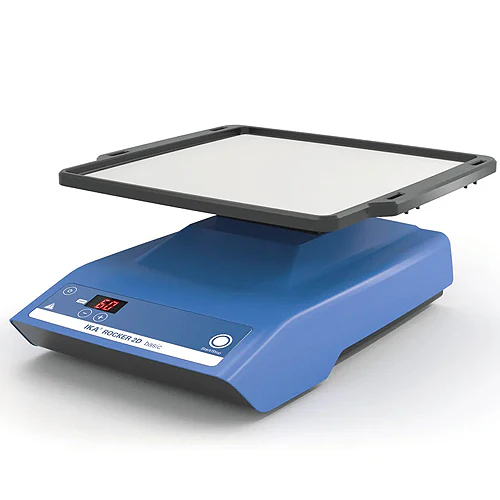
In laboratory workflows that involve mixing, suspending, or culturing samples, the shaker you choose can directly affect consistency, efficiency, and even the viability of results. With so many shaker types on the market, one of the most basic but important distinctions to understand is the difference between 2D and 3D motion. While both are commonly used in a range of biological and chemical applications, their motion patterns, intensities, and use cases are not the same.
If you're shopping for a new lab shaker or reviewing your current equipment lineup, understanding 2D vs. 3D lab shakers will help ensure you're using the right tool for your protocols.
What Is 2D Shaking?
A 2D shaker moves in a flat, orbital motion, typically in a circular or elliptical pattern on a horizontal plane. The sample platform remains level and moves back and forth side to side or front to back at a fixed angle. This motion provides consistent agitation across all vessels and is ideal for applications where gentle to moderate mixing is sufficient.
Key Characteristics
· Single-plane orbital movement
· Uniform mixing across the platform
· Variable speed settings, typically low to medium RPM
· Minimal vertical displacement
Best Use
· Staining and destaining gels
· Washing procedures
· General mixing tasks
· Sample re-suspension
2D shakers are particularly well-suited for flat-bottom containers, well plates, and shallow vessels where consistent side-to-side movement helps evenly distribute liquid contents without the risk of spillover.
What Is 3D Shaking?
3D lab shakers, on the other hand, move the platform in a three-dimensional wave-like pattern. The motion includes a gentle tilting and rotating movement, which provides more thorough mixing in all directions. The 3D movement mimics a see-saw or figure-eight motion, depending on the model.
Key Characteristics
· Multi-angle tilting and orbital rotation
· Gentle but thorough mixing
· Ideal for longer incubations or fragile samples
· Promotes mixing at multiple levels within the container
Best Use
· Hybridization protocols
· Cell culture (especially suspension cells)
· Gel staining/destaining requiring extended agitation
· Mixing in Petri dishes, culture flasks, or conical tubes
The wave-like movement of 3D shakers reduces shear stress, making them a preferred option for delicate samples such as live cells, proteins, or nucleic acids. The motion pattern also ensures contents are moved from the top, sides, and bottom of each vessel.
Lab-Specific Considerations
Before committing to one shaker type, consider:
· Container Size and Shape: Tall or narrow vessels often benefit from 3D motion, which reaches contents at varying depths.
· Volume of Throughput: High-volume mixing might require faster 2D agitation, while small-batch precision work is ideal for 3D.
· Incubation Needs: Some 3D shakers come with temperature control or are incubator-compatible for sensitive biological work.
· Noise and Space Constraints: 3D models tend to operate more quietly, though they may take up more bench space.
Our Recommendation for Reliable Lab Shakers

At MedLabAmerica.com, we know that choosing between 2D and 3D lab shakers depends on your workflow, sample type, and lab environment. That’s why we offer both motion types, along with detailed product specifications, to help you select the best fit. Whether you're optimizing staining procedures or working with delicate cultures, our curated selection ensures high-quality performance and reliable results.
Need help picking a model? Contact us; we’re here to help you make the right call for your lab.
Among our vast collection, you’ll also find medical equipment, affordable lab equipment, physical therapy and rehab equipment, veterinary equipment, and more.