
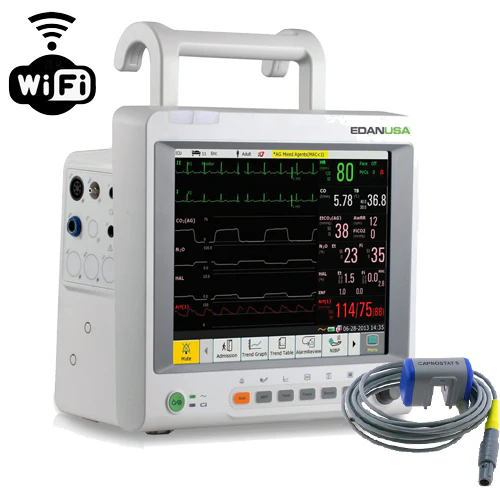
A pulse oximeter can tell you when oxygen levels have already started falling. EtCO2 monitoring tells you what may happen before that point ever arrives.
That difference matters.
In procedural sedation and emergency care, seconds count. Respiratory compromise can develop quietly, especially in sedated or critically ill patients. By the time oxygen saturation begins to drop, ventilation problems may already be significant. This is why EtCO2 monitoring, also known as capnography, has become such an important part of modern patient safety protocols in 2026.
Capnography provides continuous measurement of exhaled carbon dioxide, offering clinicians real-time insight into ventilation status. It helps identify respiratory changes earlier, supports faster intervention, and improves monitoring during high-risk situations.
Why EtCO2 Monitoring Matters
During sedation, patients may appear stable while ventilation slowly declines. Respiratory depression, airway obstruction, or hypoventilation can develop before visible clinical signs emerge.
EtCO2 monitoring helps bridge that gap by displaying breath-to-breath ventilation data in real time.
Key benefits include:
·Earlier detection of respiratory compromise
·Faster recognition of apnea or airway obstruction
·Improved monitoring during procedural sedation
·Enhanced patient safety during emergency treatment
· Better assessment of ventilation effectiveness
For clinicians working in emergency departments, endoscopy suites, surgical centers, or critical care settings, this information can be invaluable.
Understanding the Capnography Waveform
EtCO2 monitoring is not just about the number displayed on the screen. The waveform itself provides important clinical insight.
Changes in waveform shape may indicate airway obstruction, poor ventilation, bronchospasm, or equipment-related issues. A sudden loss of waveform may signal apnea, disconnection, or cardiac arrest.
Experienced providers often rely on waveform trends as much as numerical values because they provide a more complete picture of respiratory status.
Procedural Sedation and Early Intervention
Procedural sedation continues to expand across outpatient clinics, ambulatory surgery centers, and emergency medicine settings. As sedation use increases, so does the need for more proactive respiratory monitoring.
EtCO2 monitoring allows providers to identify subtle respiratory changes before oxygen desaturation occurs.
During procedural sedation, capnography can help detect:
·Apnea episodes
·Airway obstruction
·Inadequate sedation recovery
·Changes caused by sedative medications
This early warning capability allows clinicians to intervene sooner, often preventing more serious complications.
The Role of EtCO2 Monitoring in Emergency Care
In emergency situations, rapid assessment is essential. Capnography supports providers during resuscitation, airway management, and patient transport by offering immediate ventilation feedback.
EtCO2 values can help confirm endotracheal tube placement and monitor CPR effectiveness during cardiac arrest. Trends in carbon dioxide levels may also provide clues about patient deterioration or response to treatment.
Portable monitoring systems have made capnography increasingly accessible in ambulances, emergency rooms, and critical care transport settings.
Recommended: Philips Respironics® EtCO2 Sensors – Accessories
Technology Improvements in 2026
Modern EtCO2 systems are becoming more compact, accurate, and easier to integrate into patient monitoring platforms. Sidestream and mainstream technologies now offer improved moisture management, clearer waveforms, and faster response times.
Disposable sampling accessories and simplified interfaces also support infection prevention and workflow efficiency.
As healthcare facilities continue prioritizing patient safety in 2026, capnography is becoming less of an optional tool and more of a standard of care.
Smarter Monitoring Supports Safer Outcomes

EtCO2 monitoring gives clinicians something incredibly valuable: time. Time to recognize respiratory compromise earlier, respond faster, and improve patient safety before conditions worsen.
At MedLabAmerica.com, we help healthcare providers access dependable capnography and patient monitoring solutions designed for modern clinical environments. We understand how important reliable respiratory monitoring is during procedural sedation and emergency care, which is why we offer equipment that supports both accuracy and workflow efficiency.
Explore our EtCO2 monitoring solutions today and help your team stay prepared for every breath that matters.
We stock medical equipment, laboratory equipment, physical therapy and rehab equipment, medical lighting systems, dermatology equipment and supplies, veterinary equipment, and more.