
Precision temperature control is a non-negotiable requirement in virtually every scientific discipline. From molecular biology to clinical diagnostics, maintaining exact temperatures is crucial for the integrity of experiments, the reliability of results, and the safety of samples.
While water baths have long been a staple, dry block heaters have emerged as an indispensable tool, offering incredible precision, versatility, and convenience. These compact yet powerful instruments provide consistent, uniform heating for a wide array of samples, making them a go-to solution for diverse applications across the laboratory.
What is a Dry Block Heater?
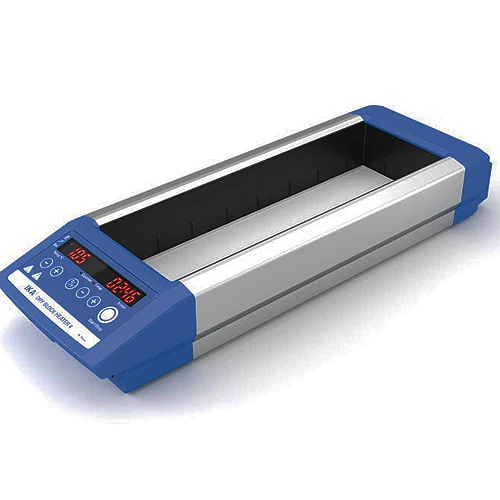
A dry block heater is a laboratory instrument designed to heat samples in various tubes, plates, or vials to a precise, constant temperature. Unlike water baths, they use interchangeable metal blocks (typically aluminum) that are heated electronically. These blocks have precisely drilled wells that perfectly fit the sample containers, ensuring excellent thermal contact and uniform temperature distribution.
This "dry" heat source eliminates the risks of contamination, evaporation, and splashing associated with water baths, making them cleaner and safer for many applications.
The Versatility Across Scientific Disciplines
The applications of dry block heaters are vast, touching almost every corner of scientific research and analysis:
· Molecular Biology and Genomics
o DNA Amplification (PCR preparation): Pre-PCR denaturation and enzyme activation require very precise temperature steps. Dry block heaters provide the stability needed for these critical reactions.
o Restriction Digests: Enzymes used in DNA manipulation are highly sensitive to temperature. Dry block heaters ensure optimal activity and prevent degradation.
o Ligation Reactions: Joining DNA fragments often requires specific, constant temperatures.
o Denaturation of Nucleic Acids: Preparing samples for various downstream applications often involves controlled denaturation.
· Enzymology and Protein Chemistry
o Enzyme Reactions: Enzymes have optimal temperature ranges for activity. Dry block heaters allow for precise control of reaction kinetics.
o Protein Digestion: Controlled heating for proteolytic digestion in proteomics.
o Sample Incubation: Maintaining proteins at specific temperatures during purification or analysis steps.
· Clinical Diagnostics
o Blood Coagulation Studies: Many coagulation assays require specific incubation temperatures.
o Microbiology Assays: Incubating bacterial or viral cultures at precise temperatures for growth or reaction.
o Elisa Assays: Many immunoassay kits require specific incubation steps.
· Sample Preparation
o Sample Thawing: Gently and uniformly thawing frozen samples, minimizing damage.
o Sample Evaporation (under vacuum): When paired with a vacuum source, dry block heaters can aid in solvent evaporation.
o Digestion of Samples: Used in environmental testing for controlled digestion of samples prior to analysis.
· General Laboratory Use
o Reagent Incubation: Maintaining reagents at stable temperatures.
o Heat Shock Experiments: Precisely timed temperature shifts for bacterial transformation.
o BOD (Biochemical Oxygen Demand) Testing: Incubating samples at specific temperatures for environmental monitoring.
Key Advantages of Dry Block Heaters
· Precision and Uniformity: Electronic heating elements combined with precisely machined blocks ensure excellent temperature stability and uniformity across all wells.
· Contamination-Free: The dry heat method eliminates the risk of cross-contamination from splashing water or condensation.
· Clean and Low Maintenance: No water to fill, monitor, or clean, significantly reducing maintenance time and effort.
· Versatility with Interchangeable Blocks: A single heater can accommodate various tube sizes by simply swapping out the blocks, making them highly adaptable to different protocols.
· Space-Saving: Their compact footprint makes them ideal for labs with limited bench space.
· Safety: Reduced risk of burns from hot water and no risk of electrical shock from water spills.
Recommended: IKA Dry Block Heater 4, Holds Four Blocks
Considerations for Choosing Your Dry Block Heater
When selecting a dry block heater, consider the number of blocks needed, the temperature range, heating/cooling rates, programmability (for multi-step protocols), and available safety features.
Equipping Your Lab for Precise Discoveries

The dry block heater is an indispensable piece of equipment for any modern scientific laboratory. Its exceptional precision, versatility, and ease of use make it suitable for an incredibly diverse array of applications, from fundamental molecular biology to routine clinical assays. Investing in a high-quality dry block heater is an investment in the accuracy, efficiency, and reliability of your research.
At MedLabAmerica.com, we offer a comprehensive selection of dry block heaters designed to meet the exact demands of your scientific needs. Our expert team is ready to assist you in choosing the perfect model that will empower your lab to achieve consistent and reliable results every time.
We also stock a variety of laboratory equipment, medical tools, veterinary equipment, dermatology equipment and supplies, physical therapy and rehab equipment, and more.